Carbon Steel Floating Ball Valve
Start with the floating-ball configuration route for the required isolation duty. Confirm the exact body grade, trim, seat, ends and operating limits for the offered valve.
Review floating ball valve designsA carbon steel ball valve quotation can look complete while leaving the trim, seats and material records undefined. Those details affect whether the valve suits your fluid, temperature and operating duty. Start with the required body grade and the complete wetted material schedule, then compare the construction and acceptance scope. You can make price comparisons more useful by identifying substitutions before purchase approval.
Pioneer Valve manufactures and supplies industrial ball valves in a range that includes carbon steel. Send your piping specification to review an offered configuration, materials and project supply requirements.
Request a Carbon Steel Ball Valve Quote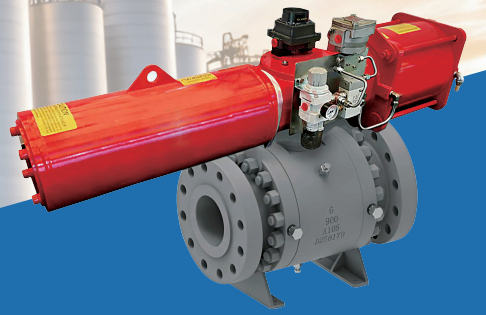
Choose the ball support and operating route, then confirm the material and sealing schedule. These options overlap: a carbon steel trunnion valve may also be actuated. Availability of a particular grade, size, rating or operator combination must be confirmed in the quotation.
Start with the floating-ball configuration route for the required isolation duty. Confirm the exact body grade, trim, seat, ends and operating limits for the offered valve.
Review floating ball valve designsReview supported-ball construction against the project specification, differential pressure and operating needs. Material grade, seat arrangement and supply scope require confirmation together.
Review trunnion configurationsSpecify pneumatic or electric operation alongside the complete valve requirement. Review torque, mechanical interface, controls and whether the offer covers an assembled package.
Review pneumatic package requirementsFor electric operation, review the motorized ball valve package requirements. A body material name does not define the actuator, control accessories or test scope.
A carbon steel ball valve uses specified carbon steel components in a quarter-turn ball valve assembly, commonly the pressure-containing body. The material description does not define ball support, end connections, seats or the complete operating envelope.
The ball rotates to open or close the flow passage. Conventional on/off ball valves should not be assumed suitable for sustained throttling merely because an actuator is fitted. If regulation is required, provide flow and pressure-drop information for a separate review of valve and trim suitability.
Our industrial ball valve range organizes the wider family. This page owns the carbon steel material requirement; the existing structure and connection pages remain the destinations for more detailed construction choices.
Use the exact project material specification rather than the shorthand steel body. The following references explain different material product forms; they are not a list of grades available in every Pioneer Valve configuration.
| Material reference | What it identifies | Purchasing check |
|---|---|---|
| ASTM A216/A216M WCB | A carbon steel casting grade under the specified casting standard. | Confirm the required grade, edition, condition, records and offered valve construction. |
| ASTM A105/A105M | A specification for carbon steel forgings used in piping components. | Confirm the offered product form, applicable requirements and any specified heat treatment or additional testing. |
| Other specified grades | A separate project requirement, including any low-temperature or special service basis. | Request availability and supporting evidence; do not substitute from a generic carbon steel description. |
Do not approve WCB and A105 as interchangeable simply because both are carbon steel. A material substitution can change the product form and required evidence, and it must be reviewed against the project specification. Likewise, a grade marking in a photograph is not the material certificate for a future order.
Identify the body, end connectors, ball, stem, seats and relevant seals separately. Different materials may be combined in one assembly. Include fluid chemistry, solids, temperature and cleaning conditions so the complete schedule can be reviewed.
State seat and seal requirements with the intended duty and leakage criteria. A metal seat does not automatically mean zero leakage, and a polymer seat does not have a universal temperature limit across all designs.
For an alternative material route, see our stainless steel ball valve category. Stainless is not universally corrosion-proof, and carbon steel is not suitable simply because the fluid appears noncorrosive. Select using the actual service and material requirements.
External paint or coating addresses a separate exposure question from internal wetted compatibility. Define coating requirements, surface preparation and inspection scope where relevant; do not treat an exterior finish as proof of internal corrosion resistance.
| Requirement | Include in the inquiry | Confirm in the offer |
|---|---|---|
| Connections | Nominal size, connection standard, flange facing or required welding/thread detail | Actual offered end construction, dimensions and mating compatibility |
| Bore | Required minimum passage or specified full/reduced bore construction | Offered bore dimension and any applicable flow data |
| Pressure and temperature | Design and operating conditions plus shutoff differential | Complete-valve limits, including seats and seals |
| Operation | Manual or powered duty, frequency, supply and control requirements | Valve-specific loads, interface and package inclusions |
| Materials | Body and complete trim/sealing schedule | Exact grades, substitutions and required records |
| Inspection | Applicable product/test references, leakage criteria and documents | Agreed tests, witness scope and written deviations |
For flanged projects, use the flanged ball valve selection page to review the connection requirements. Do not infer the whole valve rating from the body material or flange drilling alone.
Oil, gas, water or chemical service is not a complete specification. The actual fluid composition and conditions govern the review. For sour service, low temperature or other special duties, state the specific project requirements and request evidence rather than treating them as standard inclusions.
Purchasing recommendation: compare quotations against one material and inspection schedule. Request an explicit deviation list so a different body grade, seat or test scope does not disappear inside a lower unit price.
Pioneer Valve helps procurement teams, EPC contractors and equipment builders define carbon steel ball valve requirements and review project offers. We coordinate the material, construction, connection and operating scope so engineering and purchasing evaluate the same configuration.
Review the body grade, wetted parts, service conditions and construction requirements.
Confirm drawing, connection, bore and operating-envelope requirements for the proposed supply.
Agree relevant material records, tests, acceptance criteria and witness requirements.
Identify inclusions, exclusions, quantity, packing and delivery terms in writing.
Specific grades, size/class combinations, certificates, operating packages and delivery dates require confirmation in the written offer. Category descriptions do not replace an approved project data sheet.
If the project requires fire-test, emissions, sour-service or other qualification evidence, define the exact requirement and request current documentation covering the actual offered product. A standard number in a general catalogue is not proof that every material and configuration has the same qualification.
A carbon steel ball valve normally identifies a ball valve with specified carbon steel pressure-containing components, such as the body. It does not mean that the ball, stem, seats and every other part are carbon steel. Request the complete material schedule and relevant records, then confirm pressure-temperature limits, sealing materials and suitability for the actual fluid before approving the purchase.
Not without an approved specification review. WCB is a carbon steel casting grade within ASTM A216/A216M, while ASTM A105/A105M addresses carbon steel forgings for piping applications. They describe different product forms and requirements. State the exact specification, grade and required edition, and have any substitution reviewed against the project rather than treating similar service descriptions as automatic equivalence.
Yes, a carbon steel body can be combined with other specified materials for the ball, stem and trim. The actual combination must be confirmed for the offered design. Check every wetted component, seats, seals and any coating against the fluid and temperature. Do not infer the complete assembly from the body grade, painted exterior or a short product description.
Use the actual size, differential pressure, operating conditions, seat design and project specification to compare the offered configurations. Floating and trunnion describe ball support, not material grade. Ask for valve-specific operating requirements and acceptance evidence rather than apply a universal size cutoff. Confirm that the selected carbon steel grade is available in the proposed design before comparing quotations.
Suitability depends on the fluid chemistry, temperature, external exposure, corrosion allowance and any specified protection system. Outdoor protection and internal fluid compatibility are separate questions. Provide both sets of conditions for review and define the required coating and maintenance scope. Do not assume an external coating makes the wetted surfaces suitable for every corrosive fluid or eliminates inspection requirements.
Not on its own. Provide the steam conditions, design and operating pressure and temperature, cycling and shutoff differential. The body, seats, seals, packing and operating package can have different limits. Confirm the complete offered valve rating and suitability for those conditions. A body material description or nominal class does not establish a universal steam rating for the assembly.
Submit the required duty, supply conditions, travel time, operating frequency, controls and failure action where applicable. The operating package must be matched to valve-specific torque, mounting, shaft interface and operating limits. State whether the offer should include a complete assembled package or separate components. A carbon steel body and nominal valve size alone do not determine the appropriate actuator.
Send size, connection reference, required body and trim grades, seats, seals, fluid, pressures, temperatures, shutoff differential and quantity. Include floating or trunnion construction where specified, operating method, bore requirement, leakage acceptance, inspections and documentation. For replacements, provide the tag and drawing so dimensions and deviations can be checked before your team compares the technical and commercial offers.
Select a carbon steel ball valve as a complete assembly, not a body grade alone. Keep wetted materials, seats, construction, connections and acceptance requirements together when comparing offers. Send Pioneer Valve your piping specification and service conditions to review an offered configuration, clarify substitutions and obtain a project quotation with a defined technical and commercial supply scope.
Send Your Carbon Steel Ball Valve InquiryMaterial terminology references: ASTM A216/A216M casting scope and ASTM A105/A105M forging scope. Specify the required edition in the project. These references explain material forms; they do not establish product availability or certification.