Manual Flanged Angle Globe Valve
The handwheel-operated angle configuration shown in our existing range. Review connection dimensions, flow direction, stem access and the required shutoff or manual adjustment duty.
Request this configurationWhen a pipeline turns at the valve location, an angle globe valve may simplify the arrangement, but the port positions and operating space still need checking. A replacement with the correct nominal size can have different connection dimensions or flow requirements. Define the layout and process duty together before comparing quotations, so your team can evaluate installation fit, materials and operation on the same basis.
Pioneer Valve supplies industrial globe valve configurations for procurement teams, equipment builders and EPC projects. Start with the existing manual angle configuration and send your data sheet to confirm the proposed construction and supply scope.
Request an Angle Globe Valve Quote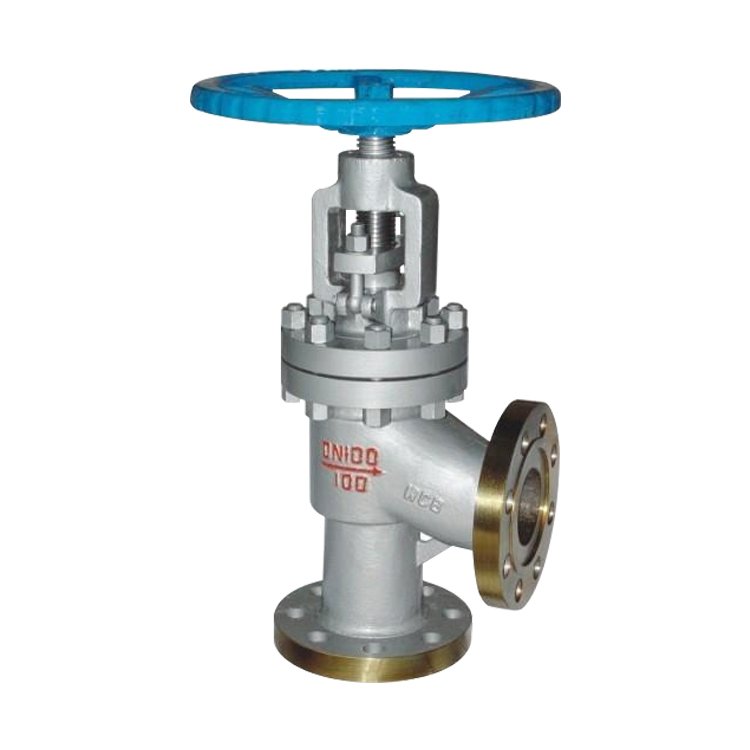
Start with the required body pattern and operating method, then define materials and interfaces. The following are inquiry routes, not three interchangeable stock models. Material or operating changes need confirmation for the proposed angle configuration.
The handwheel-operated angle configuration shown in our existing range. Review connection dimensions, flow direction, stem access and the required shutoff or manual adjustment duty.
Request this configurationSpecify the body and wetted-part grades for the actual fluid. If stainless construction is required, confirm the angle-pattern availability and complete material schedule in the project quotation.
Review material requirementsWhere powered or automatic operation is required, submit the duty for a separate package review. Confirm trim, actuator, control scope and operating limits rather than assume a manual valve is directly interchangeable.
Discuss the operating dutyFor a specified replacement, send the existing nameplate and dimensional drawing. Make any permitted alternatives clear so the quotation can identify deviations before approval.
An angle globe valve has inlet and outlet connections arranged at approximately 90 degrees. A disc or plug moves relative to a seat to close or vary the flow passage. Angle pattern identifies the body arrangement, not a complete material, rating or control specification.
This construction can be considered where the line already needs a directional change at the valve. Actual space requirements depend on connection locations, bonnet height, operator access and maintenance clearance. Do not assume the angle body always occupies less space than every straight-pattern alternative.
See our industrial globe valve range for the wider family. The globe valve working principle guide explains the operating mechanism; this page focuses on angle-pattern procurement and project fit.
| Body pattern | Selection starting point | Check before ordering |
|---|---|---|
| Angle pattern | The line requires a turn at the valve location. | Both port locations, center-to-face dimensions, direction and support arrangement. |
| Straight pattern | The required inlet and outlet layout is in line. | Installed length, operator envelope and process suitability. |
| Y-pattern | The project specifies a Y-pattern construction for review. | Actual flow passage, performance data, installation space and operating requirements. |
Body pattern alone cannot establish pressure loss or control performance. Compare the relevant offered flow data at your required operating conditions. Do not apply a generic percentage improvement to an angle valve or treat the pattern name as a substitute for sizing.
For project purchasing, include a drawing or dimensional schedule with the inquiry. This helps avoid a technically acceptable valve that cannot connect to the existing line without modifications.
| Inquiry item | Information to provide | Confirmation to request |
|---|---|---|
| Connections | Nominal size, flange standard, rating, facing or other specified end detail | Actual offered ends and compatibility with mating components |
| Port locations | Center-to-face requirements for both connections and installed orientation | General arrangement and any dimensional deviations |
| Operating envelope | Available overhead and side space, handwheel access and obstructions | Open/closed dimensions and practical operating access |
| Maintenance access | Packing work, bonnet or internal removal and lifting constraints | Required clearance and the approved service method |
| Flow direction | Required process direction and any reverse-flow scenario | Permitted direction for the offered trim and operating duty |
| Piping integration | Adjacent pipe geometry, supports and replacement constraints | Project review of fit, loads and any necessary modifications |
Purchasing recommendation: approve the connection drawing before releasing a replacement order. Nominal size and a right-angle photograph do not prove dimensional interchangeability.
State whether the valve is primarily for shutoff or operator adjustment, together with the expected differential pressure and frequency. Confirm the offered seat, operating effort and acceptance criteria. A metal seat does not establish an unconditional zero-leakage guarantee.
For automatic duty, supply minimum, normal and maximum flow, upstream and downstream pressure, temperature, fluid properties and the required control behavior. Review the trim, actuator and controls as a package rather than add a powered operator and assume equivalent performance.
Pressure drop, velocity, noise, erosion, flashing and cavitation may require a dedicated engineering assessment. A general manual angle valve is not automatically a severe-service control valve. Specialized products in the wider market can share the same angle body description while having very different internals.
Read our globe valve vs ball valve comparison when the basic valve function is still being decided. For any approved flow-control duty, the offered performance data should govern selection.
Specify body, bonnet, stem, disc or plug, seat, packing and gasket requirements separately. Provide fluid chemistry, temperature, solids and cleaning conditions. An external photograph cannot establish the complete wetted material schedule.
Where the project calls for a specific product or test standard, state the required reference, edition and scope in the inquiry. Ask for written confirmation and relevant documentation for the actual offered valve. The angle-pattern name is not evidence of certification, licensing or compliance with every industrial standard.
Pioneer Valve supports industrial angle globe valve inquiries by reviewing the configuration, layout and supply requirements together. Our project offer should identify the proposed valve and any deviations so your engineering and purchasing teams can work from a common specification.
Review operating duty, materials, ends and the requested angle configuration.
Confirm port positions, dimensions, operation and installation access requirements.
Agree relevant tests, acceptance criteria, records and any witness requirements.
Define included components, quantity, packing, delivery terms and exclusions.
Exact sizes, materials, operating packages, qualifications and delivery dates require confirmation in the written quotation. A category description does not replace an approved project data sheet.
Ask each supplier to answer the same requirement schedule. Before comparing prices, check the connection details, complete materials, operating basis and documentation inclusions. Record proposed substitutions clearly.
For replacements, describe any recurring operating or maintenance problem with the existing valve. This allows your team to review the proposed configuration against the cause of the problem rather than order solely from a similar appearance.
An angle globe valve uses a disc or plug moving toward or away from a seat, with inlet and outlet connections arranged at approximately a right angle. The body pattern combines the valve location with a change in piping direction. It does not establish material grade, pressure rating, leakage performance or automatic control capability; specify those requirements separately.
It may be an option where the piping needs a turn at the valve, but it is not a dimensionally automatic replacement. Compare connection locations, center-to-face dimensions, pipe supports, operator space and the required process duty. Review the offered drawing before changing the layout. Do not assume that replacing two components necessarily provides lower pressure loss in every installation.
Do not choose flow direction from the photograph alone. The permitted direction depends on the offered construction, trim, pressure conditions and operating requirements. Follow the body arrow, approved data sheet and installation instructions for the actual valve. State the required process direction in the inquiry, especially when matching existing piping or replacing a valve with different internal construction.
Not by itself. A manual valve can support operator adjustment within its approved duty, while automatic regulation requires an appropriately selected valve, trim, actuator and controls. Provide flow range, inlet and outlet pressures, temperature and operating requirements for assessment. Adding an actuator to a manual design does not by itself establish stable control performance or suitability for severe pressure reduction.
Supply the existing tag and drawing, pipe connection details, center-to-face dimensions for both ports, overall height and available maintenance space. Include orientation and any fixed obstructions. Compare the offered general arrangement against the installed layout before purchase approval. Nominal size and angle-pattern wording alone do not establish interchangeability with the valve already fitted in your pipeline.
The angle body name alone is not enough to confirm suitability. Flashing and cavitation require assessment using the fluid, temperature, inlet and outlet pressures and flow conditions. Special trim, materials or downstream arrangements may be needed. Do not treat a general manual angle valve as equivalent to an engineered severe-service control valve merely because both have a right-angle body.
No material name is a universal compatibility guarantee. Identify the exact grades for the body, bonnet, stem, disc or plug, seats and other wetted components. Provide fluid chemistry, temperature, solids and cleaning conditions for review. Packing and gasket suitability also matter. Confirm the offered material schedule and required records rather than approving the complete assembly from its external appearance.
Send nominal size, connection standard and facing, required materials, fluid, design and operating conditions, shutoff differential and quantity. State manual adjustment, isolation or any proposed automatic duty. Include dimensions, orientation, leakage acceptance, inspections and documentation requirements. For replacements, provide the tag and photographs so the supplier can identify inclusions and deviations before your team compares project quotations.
Select an angle globe valve by combining the required piping layout with the actual operating duty. Confirm both port dimensions, direction, materials and acceptance criteria before treating two offers as equivalent. Send Pioneer Valve your data sheet and installation drawing to review a suitable configuration, identify deviations and obtain a project quotation with a clear technical and commercial scope.
Send Your Angle Globe Valve InquiryTechnical background: MTM angle-pattern configuration references and Valmet engineered angle control valve example. These illustrate terminology and the distinction between a body pattern and a specialized control package; their parameters, trim and qualifications are not Pioneer Valve specifications.