Metal Seated Ball Valves

Floating and trunnion series for industrial isolation inquiries.

Select the Seat System for Your Actual Duty

Heat, particles and repeated operation can make a ball valve inquiry more demanding than choosing a pipe size and pressure class. If you are considering metal seats, define the fluid, shutoff conditions and inspection requirements before comparing quotations. Pioneer Valve offers MTS-F floating and MTS-T trunnion product routes to help you review the configuration and build a clear project specification.

Request a Metal Seated Valve Quote

What Is a Metal Seated Ball Valve?

A metal seated ball valve uses metallic ball and seat sealing surfaces for quarter-turn isolation. The complete seat system may include hard surface treatments, springs and secondary seals. Material selection, shutoff acceptance and operating load must be assessed together for the specified service.

Metal Seated Ball Valve Product Range

Choose a series route first, then confirm the material schedule, connections and operating package for the application. These cards link to our existing product pages; the written offer defines the exact configuration and supply scope.

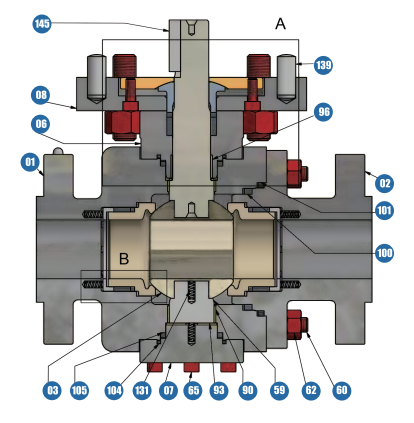
MTS-F Metal Seated Floating Ball Valve structural illustration
Floating construction: existing series structural illustration, not a product photograph.

MTS-F Metal Seated Floating Ball Valve

Review a floating-ball configuration when it matches your piping specification and isolation duty. The existing MTS-F series page describes a split-body, side-entry arrangement with metal seating.

  • Ball support and shutoff differential
  • Seat material and required acceptance
View series details →
MTS-T Metal Seated Trunnion Ball Valve structural illustration
Trunnion-mounted construction: existing series structural illustration, not a product photograph.

MTS-T Metal Seated Trunnion Ball Valve

Review a supported-ball configuration where your specification calls for trunnion construction. The existing MTS-T series page provides the product route; confirm the offered seat arrangement and cavity functions separately.

  • Seat arrangement and flow direction
  • Cavity relief, vent and drain scope
View series details →

Need to compare the underlying ball support arrangements? See our floating ball valve range and trunnion mounted ball valve range. The broader ball valve category includes other seating and construction routes.

Metal Seats vs Soft Seats: Compare the Complete Assembly

The right seat depends on your operating conditions and acceptance criteria. Metal seating is a design choice, not a universal upgrade. Evaluate the sealing interface, secondary seals and operator together rather than assigning one temperature or leakage promise to every valve in the category.

Selection questionMetal seat reviewSoft seat review
What limits the service?Ball and seat materials, surface treatment, secondary seals and construction.Seat polymer or other insert material, body seals and construction.
What shutoff is required?Agree the acceptance level, test medium, pressure and direction.Define the same test conditions; do not compare undefined leakage claims.
Are particles present?Review particle characteristics, seating interaction and accumulation.Review indentation, wear and compatibility of the proposed seat material.
What does operation cost?Check operating torque, cycling duty, maintenance and inspection scope.Check the same lifecycle items alongside the initial valve price.

For a clean service within the selected soft seat limits, changing seat technology may add cost without solving a process problem. Where temperature, solids or cycling drive the decision, ask the supplier to explain why the proposed seat system matches those conditions. Record that basis with the approved data sheet.

Specify the Ball, Seat and Secondary Seals

Sealing Surface Requirements

Our existing series information describes tungsten carbide coating for MTS-F, and tungsten carbide or chromium carbide coating for MTS-T. Treat these as options to confirm against the quoted model. Provide the service data needed to review the substrate, surface treatment and mating parts.

The Rest of the Material Schedule

Identify body, closure, stem, packing, gaskets and seat support or secondary sealing components. The term metal seated describes the primary sealing interface; it does not establish an all-metal assembly or compatibility of every wetted part.

Body material and seat technology are separate decisions. Review our stainless steel ball valve range or carbon steel ball valve range when comparing material routes. Confirm availability of the combined material, seat and connection arrangement in the project offer.

Purchasing tip: Request one component material schedule and one deviation list. A headline coating name is too brief to compare offers that use different base materials, seals or inspection requirements.

Match the Valve to Temperature, Solids and Cycling

Temperature and Thermal Changes

Provide minimum and maximum design temperatures, normal operation and startup conditions. Review the complete assembly rating and operating loads. A metallic seat does not remove the temperature limits of packing, gaskets or other components.

Particles and Deposits

Describe particle size, hardness, concentration and flow conditions. Include settling, crystallization or deposits during shutdown. These details help distinguish a suitable isolation duty from an application that needs a different valve design.

Frequent Operation

State cycles per day, operating time, differential pressure during travel and expected maintenance access. Review wear, operating loads and the actuator duty together, especially if the valve will operate remotely.

Conventional isolation ball valves should not be assumed suitable for continuous throttling. If you require flow regulation, provide minimum, normal and maximum flows and pressure drops for a separate design review. Likewise, a successful ambient test does not by itself demonstrate performance under every hot, contaminated or cyclic operating condition.

Define Shutoff Acceptance Before Comparing Prices

“Tested to a standard” needs a defined scope. Agree which tests apply, the required seat leakage acceptance, test medium, pressure, flow direction and records. If hot testing or additional verification is required, include it in the inquiry so it can be priced and confirmed before the order.

Specify the requirementSeparate shell integrity, seat leakage and functional checks. Identify the acceptance method for each.
Confirm the seat arrangementState required sealing direction and any cavity relief, vent, drain or isolation functions.
Agree the evidenceDefine reports, identification, inspection attendance and approval points for the offered configuration.

Do not infer double block and bleed behavior or safe maintenance isolation from the word trunnion. Confirm the actual seat arrangement and intended isolation procedure. Fire testing, emissions qualification and special-service requirements also need configuration-specific evidence; a metal seat alone does not establish them.

Connections and Operating Packages

Specify flange standard, facing, pressure class, bore and face-to-face requirements. For replacements, include the installed length and access restrictions. Our flanged ball valve page can help organize the connection review, while the series drawing establishes the offered dimensions.

Manual Operation

Confirm the expected operating force, required lever or gearbox, locking arrangement and clearance. Consider access during maintenance and whether the valve must be operated against the maximum shutoff differential.

Actuated Operation

Provide available utilities, failure position, operating time and cycling duty. Review valve-specific loads, actuator sizing and accessories as a package. A mounting interface does not establish that an arbitrary actuator will suit the duty.

For automation inquiries, refer to our pneumatic ball valve and motorized ball valve pages. Confirm the requested package can be combined with the selected metal seated series rather than assuming every arrangement is a standard stocked item.

What We Do

Pioneer Valve helps industrial purchasing teams, EPC contractors, equipment manufacturers and distributors turn service requirements into a defined ball valve inquiry. We use the existing MTS-F and MTS-T routes to organize the product review and identify the details needed for a project quotation.

Specification Review

Align service conditions, construction, materials and seating requirements.

Drawing Coordination

Define interfaces, bore, installation dimensions and operator clearance.

Inspection Scope

Agree tests, acceptance criteria and documentation in the written offer.

Commercial Scope

Confirm quantities, accessories, packing, delivery terms and deviations.

Available material combinations, sizes, ratings, special testing and delivery dates are confirmed for the quoted configuration. Send your project specification so technical and commercial reviews use the same basis.

Send These Details for a Project Quote

Process conditionsFluid, solids, operating and design temperatures and pressures, shutoff differential and cycling.
Valve configurationSize, quantity, floating or trunnion requirement, materials, ends, bore and operating package.
Acceptance and deliveryLeakage criteria, test scope, material records, inspection, packing and delivery requirements.

For replacements, attach the nameplate, installation photographs and drawing. Explain the failure or maintenance issue you want to address. Ask bidders to separate mandatory compliance, proposed alternatives and optional costs; this helps avoid selecting the cheapest headline price while inspection or operating accessories remain outside the offer.

Send Your Metal Seated Valve Inquiry

Metal Seated Ball Valve FAQ

What is a metal seated ball valve?

A metal seated ball valve uses metallic seating surfaces at the ball-to-seat sealing interface. The construction may include hard surface treatments selected for the duty. It does not mean every seal in the assembly is metal. Confirm the body joint, stem sealing and seat support materials as well as the ball and seat surfaces before approving a configuration.

How do I choose between metal seats and soft seats?

Start with fluid, operating temperature, solids, cycling and required shutoff acceptance. A soft seat may suit the service and commercial requirements; a metal seat may be considered when the application demands a different sealing surface. Compare the complete offered designs and test conditions. Avoid choosing only from a generic temperature label or assuming one seat type is always better.

Are metal seated ball valves always zero leakage?

No. Specify an acceptance criterion and the test method for the offered valve. Include the test medium, pressure, direction and any required operating-temperature validation. A reference to a test standard alone does not define every acceptance detail. Request the applicable report and confirm that it covers the quoted configuration rather than interpreting metal seating as an unlimited leakage guarantee.

Should I specify floating or trunnion construction?

Both construction routes can be used with metal seats. Selection depends on the required design, pressure differential, size, operating loads and seat arrangement. Send your piping specification and operating conditions for review. Do not infer the seat relief behavior, bidirectional sealing or operator size from the floating or trunnion label alone; confirm these in the proposed data sheet.

Which hard coating should I request?

Provide the medium, temperature, solids characteristics and cycling conditions before naming a coating. Our existing MTS-F page describes tungsten carbide, while MTS-T describes tungsten carbide or chromium carbide options. The proposed surface treatment, mating materials and application limits still need confirmation for your order. A coating name alone does not establish suitability or a guaranteed service life.

Can metal seated ball valves handle abrasive particles?

They may be considered for some particle-bearing duties, but suitability depends on the actual solids and valve design. State particle size, concentration, hardness, velocity and whether deposits can accumulate during shutdown. Ask how the proposed seating arrangement addresses the duty. Metal seating does not make a conventional ball valve suitable for every slurry or eliminate erosion, jamming and maintenance.

How is an actuator selected for a metal seated ball valve?

Use valve-specific operating loads at the required differential pressure and temperature, including breakaway and seating conditions. Provide cycling frequency, operating time, available air or electrical supply and failure-position requirements. Review the interface and accessories with the actuator package. An ISO mounting interface or nominal valve size alone is insufficient to select a dependable operating assembly for your process.

What should I send for a project quotation?

Send nominal size, quantity, fluid, solids information, design and operating conditions, shutoff differential, end connections and required bore. Add materials, seat acceptance, operator, cycling duty and documentation requirements. For a replacement, attach nameplate photographs and installed dimensions. Request a written deviation list so technical approval and price comparison use the same scope before you place the order.

Final Thoughts

Choose a metal seated ball valve around the service, sealing acceptance and operating package your project actually needs. Compare the floating and trunnion routes, then agree materials, inspection and supply scope before placing an order. Send Pioneer Valve your data sheet or replacement details to review an MTS-F or MTS-T configuration and obtain a clearly defined project quotation.

Discuss Your Valve Specification

Technical background: Penta metal seated ball valve range and KVC seating and coating overview. External examples explain industry terminology; their ratings and qualifications do not describe Pioneer Valve supply.