Wafer Configuration
For installation between compatible mating flanges. Check flange drilling, body centering, gasket requirements and disc clearance within adjoining pipework.
Confirm face-to-face length and permitted differential pressure.
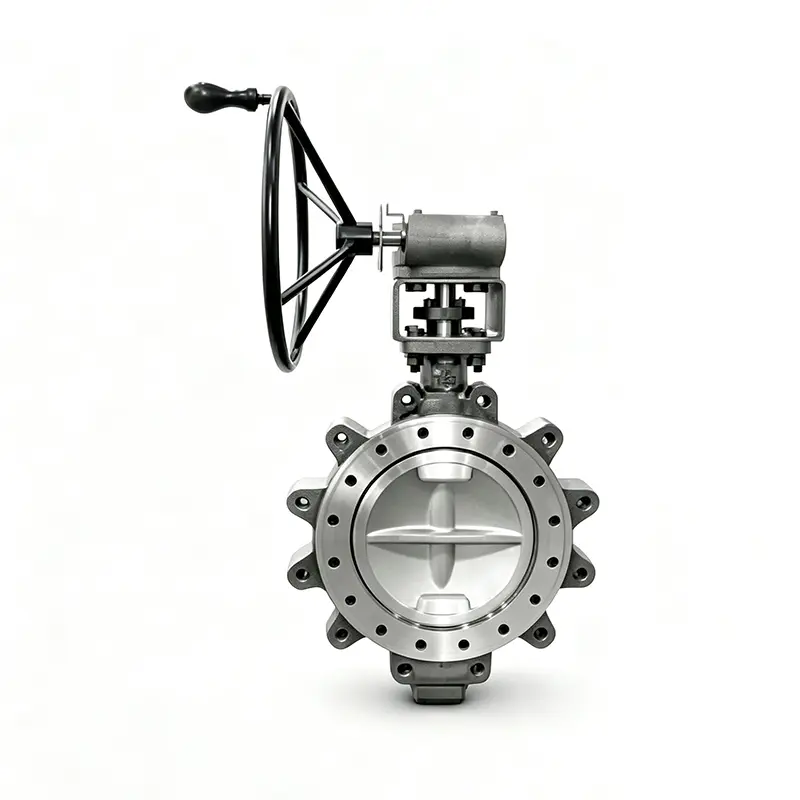
Gear-operated valve from our existing range. Confirm internal geometry, materials and rating from the offered model's data sheet.
A high performance butterfly valve quotation is only useful when it matches your actual operating duty. A familiar size and pressure class do not establish seat compatibility, sealing direction or actuator suitability. Define the fluid, temperature, differential pressure and installation requirements before comparing suppliers. You can then evaluate double offset configurations against the same specification and identify exclusions before the purchase order is issued.
A double offset butterfly valve is also called a high performance butterfly valve in many industrial specifications. It is commonly used for water, utility, process, oil, gas and chemical service where compact quarter-turn operation, lower torque and improved durability are useful for the project.
If you are comparing butterfly valve suppliers, check the offset design, seat material, pressure rating, flange standard, body material, disc material, operating temperature and actuation needs before accepting a price. The right choice depends on actual service, not only the valve name.
Request a QuoteDouble offset geometry and body connection are separate choices. Specify the required connection, then confirm the available seat, materials and rating for the offered model. These configuration routes do not imply that every combination is available in every size.
For installation between compatible mating flanges. Check flange drilling, body centering, gasket requirements and disc clearance within adjoining pipework.
Confirm face-to-face length and permitted differential pressure.
For a lugged bolting interface. If downstream piping will be removed, request explicit end-of-line suitability and any reduced rating for that condition.
Lug construction alone does not establish safe dead-end service.
For pneumatic or electric operation. Define supply, control signal, operating frequency, travel time and the required failure response.
Request torque selection for the complete valve and actuator package.
Ask about flanged body requirements separately where your piping specification calls for them. Do not substitute a different body connection without written approval.
Discuss Your ConfigurationThe term high performance commonly describes double offset butterfly valves, but it is not a single universal pressure, temperature or leakage specification. The offset geometry reduces rubbing through much of the travel; actual torque, wear and sealing depend on the selected design and process conditions.
PTFE-based, elastomeric and other sealing options have different service boundaries. Ask for the exact seat construction and compound, not just a broad material label. Provide normal and maximum temperature, fluid composition, concentration, cleaning conditions and cycle frequency. The body rating can exceed the operating limits of the complete seated assembly.
State whether isolation is required in one or both directions, at what differential pressure and to which leakage criteria. Bidirectional shutoff, low-pressure sealing, fire-test qualification and fugitive-emission qualification must be confirmed for the offered model. None follows automatically from the phrase high performance.
Review seating, unseating and dynamic torque with the manufacturer. Supply the minimum available air pressure or electrical power requirements, including required fail action. Valve orientation and differential pressure can affect selection. Do not size an actuator only from nominal valve diameter or copy a torque value from another manufacturer's catalog.
For modulating service, provide minimum, normal and maximum flow, inlet and outlet pressure and temperature. Ask for capacity and control-range review, including cavitation, noise and dynamic torque where relevant. A positioner controls travel; it does not make every isolation valve suitable for stable flow regulation.
For material-led procurement, see our stainless steel butterfly valve configurations. Specify body, disc, shaft, seat and seals individually rather than assuming a stainless disc means an entirely stainless valve.
Final dimensions, materials and testing requirements should be confirmed according to pressure, temperature, medium and project standard.
| Valve Type | Double offset butterfly valve, double eccentric butterfly valve or high performance butterfly valve |
| Body Style | Wafer, lug or flanged design according to pipeline connection |
| Function | Industrial isolation, on-off control or limited throttling after engineering review |
| Operation | Lever, gearbox, pneumatic actuator, electric actuator or bare shaft |
| Body Material | Ductile iron, carbon steel, stainless steel or project-specified material |
| Disc Material | Stainless steel, carbon steel, ductile iron or coated disc options |
| Seat Material | EPDM, NBR, PTFE, reinforced PTFE or project-specific soft seat options |
| Documents | Drawings, testing, material records and packing documentation as agreed in the order |
Double offset design is useful when the buyer wants better performance than a concentric valve without moving straight to a higher-cost triple offset specification.
The double offset structure moves the shaft away from the disc and pipe centerline, reducing rubbing between the sealing surface and seat during operation. This can help extend seat life in frequent operation or higher-performance industrial service.
Less seat friction can also reduce operating torque compared with many concentric designs. If the valve will be automated, lower torque may affect actuator selection, cost and response speed, so it should be reviewed during quotation.
Double offset butterfly valves are often considered for process water, utility, chemical and general industrial lines where compact size and improved sealing life matter, but where full triple offset metal seated construction is not required.
Both designs reduce seat friction, but they are normally selected for different service levels and budgets.
| Item | Double Offset Butterfly Valve | Triple Offset Butterfly Valve |
|---|---|---|
| Offset design | Two shaft offsets reduce seat rubbing and improve high performance soft seated operation. | Three offsets include sealing geometry for metal seated shutoff and critical service. |
| Typical service | Industrial water, utility, process and moderate oil or gas service. | Consider where the offered metal-seated design meets the specified temperature, pressure and leakage duty. |
| Cost position | Compare the complete configuration and maintenance requirements, not the offset count alone. | Compare equivalent materials, testing, actuation and documented operating limits. |
| Buying advice | Choose when seat life, torque and compact installation matter more than lowest price. | Choose when metal seating, high temperature or stricter leakage performance is required. |
Double offset butterfly valves are useful where compact quarter-turn operation must be combined with better durability than a basic soft seated butterfly valve.
Review Pioneer Valve's butterfly valve range for wafer, lug, flanged and triple eccentric service.
View CategoryCompare compact wafer body options for flange-to-flange installation and economical inline isolation.
View Wafer TypeReview lug body selection for one-side maintenance, flange bolting and dead-end service checks.
View Lug TypeCompare triple offset design for metal seated, high temperature and critical shutoff applications.
View Triple OffsetUnderstand concentric, double offset and triple offset butterfly valve structures before selection.
Read TypesSend your service condition so the team can confirm offset design, seat material and actuation.
Contact SalesA complete inquiry helps the supplier confirm whether double offset design is enough or whether the project needs triple offset construction.
In many industrial specifications, the term refers to a double offset butterfly valve. Its geometry reduces seat rubbing during much of the operating travel. It does not define a universal rating or certification. Confirm the actual construction, seat materials, pressure-temperature limits, sealing direction and leakage criteria for the offered model before using the name as a purchasing specification.
The terms commonly overlap, but supplier terminology can vary. Request a drawing or construction description to confirm what is being offered. A product called high performance should still be specified by its geometry, connection, seat and duty limits. This page covers double offset procurement; triple offset and concentric designs should be compared as distinct constructions rather than assumed equivalents.
Start with fluid composition, temperature, pressure and cleaning conditions. Then review the exact compound and seat construction offered by the supplier. A general PTFE or rubber description does not establish the complete valve rating. Include cycling frequency and leakage requirements in the review, and request documented operating limits for the configuration you plan to order.
No. Lug construction describes the bolting interface, not the permitted end-of-line duty. Obtain explicit confirmation of the offered model's end-of-line suitability, pressure limits, sealing direction and bolting requirements. Downstream removal also requires an appropriate isolation procedure. Do not assume the normal between-flanges rating remains valid when one side of the pipeline is disconnected for maintenance.
Do not assume that from the product name. Specify the required sealing direction, differential pressure and leakage acceptance criteria, then request confirmation for the offered design. Installation orientation can matter for sealing and torque. If your system can experience reverse pressure, include that case in the inquiry so the supplier can evaluate it before the valve is approved.
Potentially, but throttling needs its own engineering review. Provide the full flow range, upstream and downstream pressures, temperature and expected operating frequency. Ask about capacity, usable disc positions, dynamic torque, noise and cavitation where applicable. An actuator and positioner do not establish process suitability on their own; select the complete package for the actual control duty.
No. Reduced rubbing can help the operating behavior, but actuator sizing still depends on the specific valve, seat, differential pressure, temperature and required safety margin. Obtain the manufacturer's torque data for the intended service. For pneumatic operation, use the minimum available supply pressure, and check spring-stroke torque as well as air-stroke torque where spring return is required.
Request the valve data sheet, dimensions, materials, seat construction, pressure-temperature limits, actuation scope and testing requirements. Identify sealing direction, leakage criteria, documentation, accessories and spare parts. Ask for a written deviation list and itemized exclusions. This allows your team to compare equivalent packages instead of treating a bare valve and a complete inspected assembly as the same purchase.
A high performance butterfly valve should be selected against a defined duty, not a product label alone. Confirm the connection, seat, materials, sealing direction and operating package before comparing offers. Send Pioneer Valve your process data and valve schedule to discuss a double offset configuration, resolve specification gaps and prepare a quotation with clear testing, documentation and delivery requirements.
Technical reference: Bray double offset construction overview. This reference illustrates terminology and does not establish Pioneer Valve ratings, qualifications or product availability.
Send your size, pressure rating, body style, material, seat, medium, temperature, operation method and quantity. Our team will help confirm the suitable butterfly valve configuration.
Planning air-operated isolation? Review our pneumatic butterfly valve product range for actuator action, air supply and complete package requirements.