When a globe valve takes too much pressure out of a line, changing the body pattern may help. A Y-pattern globe valve uses an inclined stem and seat arrangement that can offer a less abrupt flow path than a conventional T-pattern design. Before you change the specification, compare the actual flow data, check the space around the inclined operator, and verify that the proposed trim suits the duty.
What Is a Y-Pattern Globe Valve?
A Y-pattern globe valve, also called a Y-type or inclined globe valve, places the stem at an angle to the main pipe axis. The disc still moves toward and away from a seat. The inclined arrangement changes the path through the body and the space needed above and alongside the pipe.
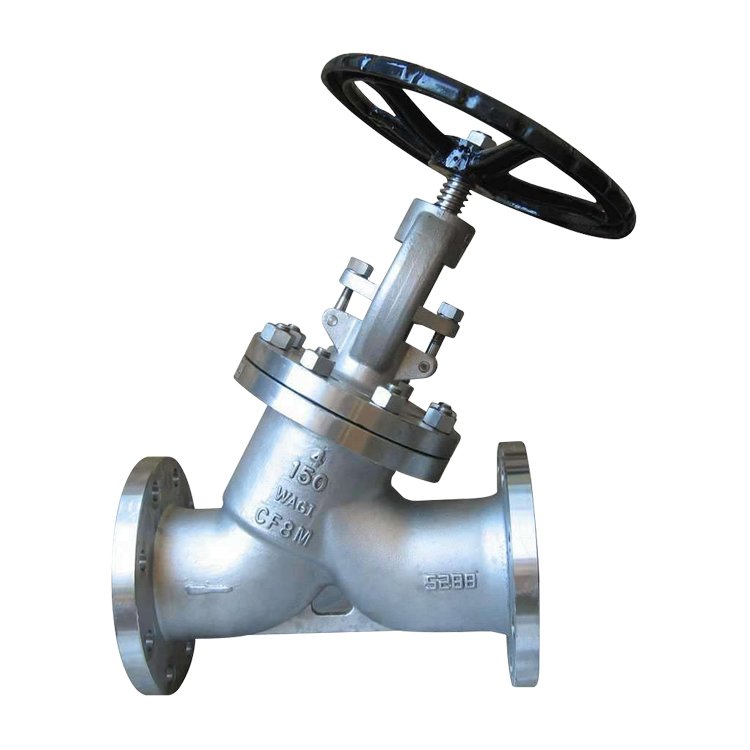
Manual Flanged Y-Pattern Configuration
The catalog configuration has a handwheel, an inclined stem assembly and flanged ends on an in-line piping axis. It is a starting point for reviewing projects that need a globe valve with this body geometry. Send the size, mating flange details and process conditions so the proposed model can be reviewed for the line.
For a project where the flange interface is the main constraint, use our flanged globe valve selection checklist to collect the dimensions before requesting a quote.
Y-Pattern vs T-Pattern and Angle Globe Valves
| Body pattern | Piping and operator arrangement | What to compare |
|---|---|---|
| Y-pattern | In-line ends with an inclined stem | Flow coefficient, operator clearance along the incline, service access |
| T-pattern | In-line ends with the stem typically perpendicular to the pipe axis | Installed length, trim, pressure drop and access above the bonnet |
| Angle pattern | Inlet and outlet on perpendicular axes in a typical 90-degree arrangement | Port orientation, center-to-face dimensions and the drawing’s flow direction |
The angle globe valve fits a different piping layout. For an in-line replacement, compare the Y-pattern and T-pattern models against the same operating conditions, then verify the proposed face-to-face length. The inclined geometry is also offered in different bonnet designs across the industry. For example, Velan documents both bolted bonnet inclined and pressure seal Y-pattern examples. Treat the body pattern and bonnet design as separate entries on your specification.
Compare Pressure Drop at the Flow You Need
Start with the available pressure drop across the valve at normal and maximum flow. Ask for the flow coefficient of the proposed size and trim and the valve travel associated with that value. Full-open capacity can help compare models for isolation service, while throttling requires information at the openings where the valve will actually operate. Compare the offers with the same fluid data, flow units, inlet and outlet conditions and sizing basis.
If your existing valve shows unexpectedly high pressure loss, check its travel and the measurements across the valve before attributing the issue to body geometry. A partly open valve, different trim or restrictions elsewhere in the line can change the observed result. For steam or gas, supply the process pressures, temperature and flow range so the proposed valve can be reviewed on the applicable compressible-flow basis.
Check Pressure-Temperature Limits, Materials and Trim
Give the supplier operating and design pressures and temperatures, medium composition and the maximum differential the valve must shut against. Review the body and bonnet alongside the stem, disc, seat and packing. If corrosion is a concern, include the relevant fluid chemistry when reviewing the stainless steel globe valve options. If service pressure drives selection, review the high pressure globe valve requirements and request written confirmation of the offered configuration’s limits.
Check the Inclined Operator Against the Pipe Layout
On a crowded skid, the handwheel and stem can extend toward a support, cable tray or adjacent valve. Review the operating envelope through the full stroke and leave the access required for service in the approved drawing. For a replacement, compare the mating flanges and installed length, and mark the intended flow direction. Ask the supplier to show that direction and any mounting constraints on the offered drawing.
What We Do
Pioneer Valve reviews industrial globe valve inquiries against the pipe interface and operating duty. Send a datasheet or marked-up line drawing for a new project. For a replacement, include the existing tag and photographs as well. A comparable request lists the required dimensions, proposed materials, trim, shutoff criteria and inspection scope, with any deviations identified on the offer.
Request a Y-Pattern Globe Valve Quote
Frequently Asked Questions
Does a Y-pattern globe valve always have lower pressure drop?
An inclined body can reduce resistance compared with a conventional globe pattern, but the actual result depends on the size, trim and opening. Compare model-specific flow data at the same operating conditions. For a throttling duty, check the flow characteristic and the expected travel range as well as the fully open flow coefficient before selecting the valve.
Is a Y-pattern globe valve the same as an angle globe valve?
A typical Y-pattern body keeps the inlet and outlet on one pipe axis and inclines the stem. An angle globe valve connects pipe runs on different axes, commonly at 90 degrees. Use the piping drawing to decide which arrangement fits. Then confirm the flow direction, end dimensions and clearance from the actual model drawing before ordering.
Can a Y-pattern globe valve replace an existing T-pattern valve?
It may be possible when the connection standard, face-to-face length and service requirements match. Compare the new drawing with the existing spool and check the space swept by the inclined stem and handwheel during operation and servicing. Provide the existing valve tag and the design duty, so the supplier can flag dimensional or performance differences before you approve the replacement.
Can a Y-pattern globe valve be used for throttling?
Ask for a model and trim suited to the actual operating range. Send minimum, normal and maximum flow together with the corresponding upstream and downstream pressures. The supplier can then review the expected openings and any concerns such as noise, cavitation or flashing. Specify shutoff requirements separately if the valve also needs to isolate equipment during operation.
Does the Y-pattern designation specify a pressure seal bonnet?
The Y-pattern designation describes the inclined body and stem arrangement. Specify the bonnet construction separately if your project requires a particular joint design. Ask for the offered sectional drawing and pressure-temperature documentation, then check the materials, closure design and inspection requirements for that model. Different Y-pattern valves may have different bonnet arrangements and service limits.
What do I need to send for a flanged Y-pattern valve quote?
Send the valve size, mating flange standard and facing, required installed length, fluid data and operating and design conditions. Include flow range, shutoff differential, material and inspection requirements. If you are replacing a valve, add a drawing or photo showing clearance around the operator. Ask for a dimensioned drawing and a written list of deviations with the quote.
How do I confirm the correct flow direction?
Mark the intended process flow on the inquiry drawing and ask the supplier to show the required direction for the offered valve and service. At receipt, verify the model, drawing and body marking together. The angle of the handwheel can help identify the body pattern, but the approved documentation determines which port is the inlet for installation.
Final Thoughts
Choose a Y-pattern globe valve when the inclined geometry suits the line and the offered flow data meets your duty. Confirm the pressure drop at the required travel, the pressure-temperature limits, both flange interfaces and the space needed for operation. Send Pioneer Valve your layout and process data to review the proposed configuration and the documents required for your order.