A Rubber Seat That Matches Your Water or Utility Line
A replacement valve can fit between the flanges and still have the wrong seat for the fluid. Treatment chemicals, oil contamination and cleaning temperatures can change what your pipeline needs. Before ordering a rubber seated butterfly valve, identify the medium and operating limits, then match the seat compound, disc material and connection to the actual installation.
A rubber seated butterfly valve closes a rotating disc against an elastomer seat to shut off flow. The rubber provides a deformable sealing surface. In a rubber lined centerline design, the liner also covers the body's internal bore. Seat material, pressure capability and installation requirements must be checked for the selected model.
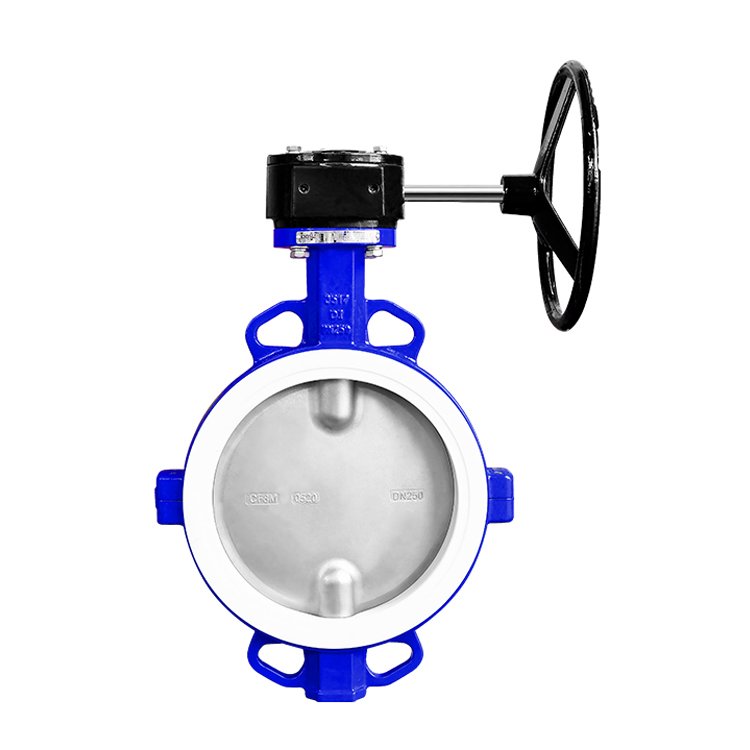
Pioneer's butterfly valve range includes a ductile iron, wafer-type rubber lined centerline design. Send the service conditions and existing connection details to confirm a suitable configuration.
Request a Valve QuoteEPDM vs NBR: Start with the Fluid
EPDM and NBR are common rubber seat materials, but they are not interchangeable. NBR is also called nitrile or Buna-N. These names describe material families; the exact formulation and the complete valve design determine the usable operating range.
| Seat family | Initial selection direction | What to confirm |
|---|---|---|
| EPDM | Often evaluated for water and suitable water-based fluids. | Treatment chemicals, concentration and temperature. Standard EPDM is generally unsuitable for petroleum oils. |
| NBR / Buna-N | Often evaluated where petroleum oil compatibility is needed. | Exact oil or mixture, additives, temperature and the proposed compound's compatibility. |
| Other compounds | Consider when neither initial option satisfies the service. | Material availability for the valve model and documented compatibility with every operating and cleaning fluid. |
These general material tendencies are described in Parker's elastomer handbook. They provide a screening step, not a temperature rating or approval for a Pioneer valve. Ask us to confirm the seat material available for your requested configuration.
If your inquiry only says “water,” include whether that means clean water, treated cooling water, wastewater or a glycol mixture. This small detail can change the seat recommendation before a price is prepared.
What to Specify for a Rubber Seated Butterfly Valve
| Item | Information needed for selection |
|---|---|
| Valve and connection | DN or NPS, wafer or other required body style, flange drilling and face-to-face length. |
| Wetted materials | Seat compound, disc and shaft materials, plus any coating or liner requirements. |
| Operating limits | Normal and maximum temperature, operating pressure, shutoff differential and any vacuum duty. |
| Shutoff requirement | Test standard, permitted leakage and required pressure direction. |
| Operation | Manual gearbox or requested actuator, cycle frequency, supply and fail position. |
| Project documents | Drawings, inspection requirements, material records and any specified approvals. |
A PN or Class designation does not replace the allowable pressure at your operating temperature. Likewise, a body pressure rating should not be assumed to equal the seat's shutoff differential rating. Ask for both when comparing proposals.
Water Treatment, Cooling Water and Utility Service
Water treatment and distribution
A rubber seated design can be considered for compatible water duties requiring quarter-turn isolation. Include disinfectants, cleaning chemicals and their concentrations. If the valve will contact drinking water, state the applicable project approval at the inquiry stage. The NSF explanation of NSF/ANSI/CAN 61 describes health-effects evaluation for drinking-water components; an EPDM material designation alone does not demonstrate certification.
Cooling and building utility circuits
Provide the fluid mixture, inhibitor package and seasonal temperature range. For a replacement, identify changes to the circuit since the original valve was installed. A visually similar seat is not sufficient evidence that the new valve can handle a different coolant or cleaning process.
Wastewater with solids
Describe grit, fibers, solids concentration and the operating pattern. A rubber liner does not make every butterfly valve suitable for abrasive or fibrous service. If repeated blockage is the problem, include that history so a different valve arrangement can be considered rather than repeating the original selection.
Check the Flanges, Disc Clearance and Seat Compression
The seat and connection need to be considered together. Check the actual flange standard, face condition, pipe bore and clearance for the disc throughout its travel. For a wafer installation, see the wafer butterfly valve guide; for a connection requiring threaded body lugs, review the lug butterfly valve guide.
Some rubber seated designs use the seat's flange-facing surface as the joint seal. For example, Bray's resilient seated installation manual gives gasket instructions for its own designs. Obtain the installation instructions for the actual Pioneer configuration before deciding whether separate gaskets are required.
During installation, follow the supplied disc-position and bolt-tightening procedure. Check for interference before applying operating pressure. If torque becomes unexpectedly high, investigate alignment, seat compression and obstructions rather than forcing the actuator. Any inspection requiring access to the valve must take place with the line isolated and depressurized.
Prepare a Quote That Can Be Compared
Send the following details to Pioneer Valve so the proposed rubber lined centerline valve can be checked against your installation. If you are replacing a valve, attach its nameplate, drawing and a description of any recurring leakage or operating difficulty.
- Size, quantity, destination and required delivery date.
- Medium, additives, contamination and cleaning fluids.
- Normal and maximum temperature, pressure and closed-valve differential.
- Flange standard, face-to-face length and available pipe bore.
- Requested seat compound, disc material and operation method.
- Leakage acceptance, test records and project certification requirements.
Ask each quotation to identify the actual seat compound and model, not simply “rubber seat.” Confirm whether the liner is replaceable and what spare parts are available. This makes later maintenance planning more useful than comparing nominal size and unit price alone.
If your temperature or medium rules out the available elastomers, review the metal seated butterfly valve selection page. A different sealing construction still requires its own compatibility and performance checks.
Rubber Seated Butterfly Valve FAQ
Is a rubber seated butterfly valve the same as a resilient seated valve?
A rubber seated butterfly valve is a common type of resilient seated butterfly valve. Rubber identifies the elastomer sealing material, while resilient seated is a broader description of the sealing design. Supplier terminology varies, and some lined constructions combine different materials. Specify the actual seat compound and construction rather than treating every resilient seated product as interchangeable.
Should I choose EPDM or NBR for cooling water?
EPDM is often a starting point for water service, but the water chemistry still matters. Provide the glycol type and concentration, treatment chemicals, maximum temperature and any oil contamination. NBR may enter the comparison when petroleum oils are present, but it is not a universal substitute. Ask for compatibility confirmation for the exact compound and fluid mixture.
Does an EPDM seat mean the valve is approved for drinking water?
No. EPDM names a material family; it does not establish drinking-water certification for the complete valve. Where your project requires approval, request the current listing or certificate for the offered model and check its scope, materials and use conditions. A certificate for a rubber compound alone should not be treated as certification of the assembled valve.
Do rubber lined butterfly valves need separate flange gaskets?
Some designs use the extended rubber seat to seal against the pipe flanges and are installed without separate gaskets. Other constructions can have different requirements. Follow the installation manual for the offered valve, including flange face and bolt tightening instructions. Adding a gasket without checking the design may change seat compression and interfere with the intended sealing arrangement.
Can the rubber seat be replaced during maintenance?
That depends on how the seat is retained. Some valves have a replaceable seat, while others use a bonded liner or a construction requiring different repair work. Ask for the maintenance procedure and spare-part identification before ordering. A replacement seat must match the valve design and compound specification; nominal diameter alone does not establish that a spare will fit.
Can a rubber seated wafer valve be used at the end of a line?
Do not infer end-of-line suitability from the seat material or a normal inline pressure rating. The body connection and documented dead-end rating determine whether the configuration can be used that way. State whether downstream pipework will be removed while pressure remains upstream, then ask the supplier to confirm the required body design, pressure limit and installation arrangement.
Final Thoughts
A rubber seated butterfly valve works best when the compound, connection and operating conditions are specified together. Identify the fluid chemistry first, then confirm pressure, temperature and installation requirements for the chosen model. Pioneer Valve's rubber lined centerline range is a starting point for that selection. Send your service data and connection details to discuss a configuration and receive a project quotation.
Send Your Service Conditions