Threaded-End Configuration
Specify the exact thread standard, nominal size and engagement requirements. Review the material, pressure-temperature basis and installation method with the piping specification.
Send your specificationTwo forged steel gate valve quotations can share the same nominal size and still differ in connection, bonnet construction, bore and inspection scope. Those differences affect installation, maintenance and purchase approval. Start with the piping specification and actual operating duty rather than a short product name. You can then identify acceptable configurations, make deviations visible and compare offers on the same basis.
Pioneer Valve manufactures and supplies forged steel gate valves for industrial project inquiries. Send your piping specification to review a suitable offered configuration, required documentation and the scope of supply. Exact materials, dimensions, connections and ratings are confirmed in the written quotation.
Discuss Your Gate Valve Requirement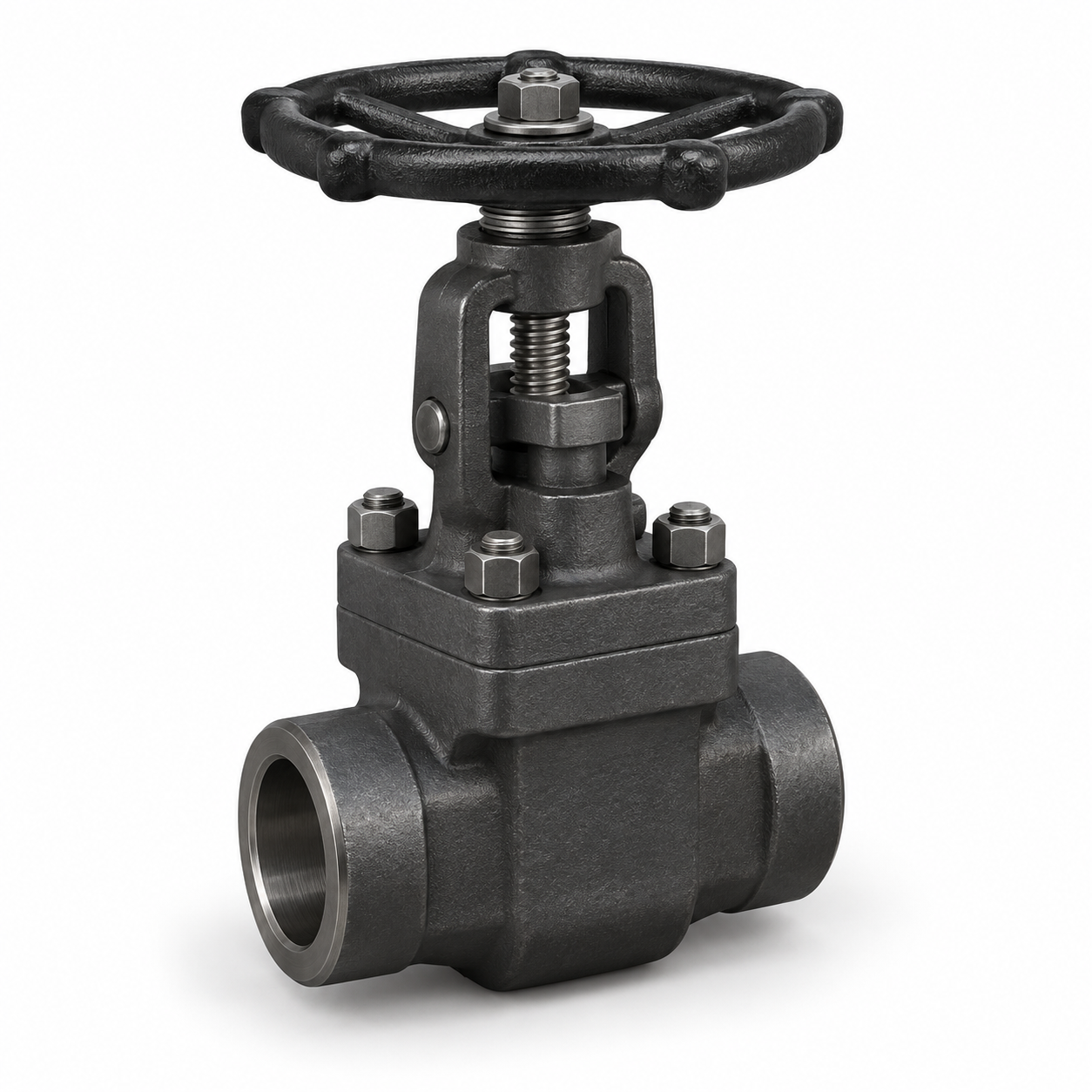
Use the end connection to organize your inquiry, then define the materials, bonnet, bore and operating requirements. Use these specification routes to discuss the proposed valve. Availability of a particular end construction in a given size, class or material must be confirmed in the written quotation.
Specify the exact thread standard, nominal size and engagement requirements. Review the material, pressure-temperature basis and installation method with the piping specification.
Send your specificationProvide the pipe dimensions, welding requirements and required inspection scope. Confirm the offered socket geometry and assembly instructions before fabrication.
Send your specificationState flange standard, rating, facing and required installed length. Compare actual drilling and dimensions rather than relying only on nominal pipe size.
Send your specificationWhere a butt-weld or extended-body arrangement is required, attach the project detail for separate review. Do not assume all end constructions are interchangeable or available in every size and class.
Forged steel identifies the manufacturing route for relevant pressure-containing components. Gate describes a closing element that moves into and out of the flow passage. Neither term alone establishes the complete rating, material grade, sealing performance or standards compliance.
A conventional gate valve is generally an isolation device, used fully open or fully closed. Selection should account for the fluid, pressure-temperature conditions and the differential pressure at which the valve must operate. Compact construction does not make it a universal choice for every process line.
Compare the broader gate valve range for other construction routes. The existing API 600 gate valve page addresses a different specification route and should not be treated as proof of forged API 602 capability.
| Requirement | Include in your inquiry | Review in the offer |
|---|---|---|
| Operating duty | Fluid, design and operating pressure/temperature, shutoff differential and cycle frequency | Suitability and stated operating limits |
| Material scope | Body, bonnet, stem, wedge, seats, packing and gasket grades | Exact offered grades and substitutions |
| End connection | Thread reference, pipe/weld details or flange standard and facing | Matching dimensions and fabrication requirements |
| Bonnet construction | Bolted or specified welded construction | Joint arrangement and approved maintenance approach |
| Port and dimensions | Bore requirement, installed length and overall envelope | Actual offered dimensions rather than nominal labels |
| Inspection and records | Product/test standards, leakage acceptance, material traceability and witness requirements | Included tests, records and deviations |
A product standard, material specification and pressure class are separate inputs. State each required reference and edition where applicable. Avoid compressing the whole requirement into a phrase such as forged Class 800 valve.
The required joint construction affects assembly and maintenance planning. Review the actual design and approved service instructions. Do not substitute a bonnet arrangement simply because the nominal size and pressure class match.
When bore size matters, specify the minimum acceptable passage or reference requirement. Request the actual offered dimension. A full-port label should not replace checking the relevant drawing and process requirement.
Confirm the stem arrangement, operator access and installation envelope at the same time. For an external rising stem, review the fully open height and access to the operating mechanism. Our rising stem gate valve page explains the dimensional questions without establishing which forged models are available.
Purchasing recommendation: attach the agreed technical schedule and approved drawing to the order. Make differences in bore, bonnet or stem construction explicit approval items rather than unresolved quotation notes.
Specify the required grade for each relevant component rather than describing the entire assembly as carbon steel or stainless steel. Fluid chemistry, operating temperature, cleaning conditions and the selected trim can change the technical review.
Forging alone does not prove that one valve is stronger, safer or better suited than every cast alternative. Compare the actual material, design, service conditions and acceptance evidence. Likewise, a metal seat does not establish zero leakage without an agreed test basis.
For a material-led inquiry, see our stainless steel gate valve category. Confirm the manufacturing route separately; stainless is not a synonym for forged.
API 602 is a common compact steel valve reference, but a product name is not evidence of conformity. Identify the required edition and applicable construction in the piping specification, then verify the offered data sheet, tests and supporting records.
Do not infer API licensing from compliance wording, or compliance from a marketing title. If your project requires a particular approval, licence or certificate, request current evidence covering the actual manufacturer and product scope before purchase approval.
The existing API 600 vs API 602 guide provides background for discussing the specification. Where API 602 is required, include it in your inquiry and request written confirmation and relevant evidence for the offered valve. This category page does not establish API licensing or unconditional conformity for every configuration.
Pioneer Valve supports industrial procurement teams, EPC contractors and equipment builders with forged steel gate valve configuration reviews and project quotations. We review your specification, confirm the proposed supply and identify inclusions and deviations so purchasing and engineering can assess the same scope.
For replacements, share the existing nameplate, installed dimensions and service history. Identify access restrictions or operating problems so a similar-looking alternative does not repeat the same installation or maintenance issue.
A forged steel gate valve uses forged steel pressure-containing components in a gate valve construction. Forged describes the material manufacturing route, while gate identifies the closing mechanism. It does not establish a particular pressure class, material grade or product standard. Confirm the complete data sheet, required material records and test scope rather than selecting from the product name alone.
No. The material manufacturing route and compliance with a specified product standard are different matters. API 602 is a common reference for compact steel gate, globe and check valves, but the required edition, scope and construction must be reviewed. Request evidence for the actual offered valve; the words forged steel do not establish standard compliance or API licensing.
Follow the piping specification and installation requirements. Threaded ends require the exact thread reference, socket weld ends require compatible pipe and welding details, and flanged ends require matching drilling and facing. Also consider inspection, maintenance and replacement access. Do not choose a connection from price alone or assume every connection is available for every proposed size and pressure rating.
Not without reviewing the project requirements. The bonnet joint affects construction, maintenance access and the applicable inspection scope. Confirm the offered arrangement and the permitted maintenance method rather than treating the joint as a minor price option. If an alternative bonnet is proposed, document the deviation and obtain engineering approval before substituting it in an existing piping specification.
No. A class designation is not an unconditional operating pressure for every material and temperature. The applicable rating depends on the governing specification, material group and temperature, and the complete valve can have additional limitations. Supply the actual design and operating conditions and request the offered pressure-temperature basis rather than interpreting the number as a universal working pressure.
A conventional gate valve is normally selected for fully open or fully closed isolation, not sustained throttling. Partially open operation can expose internal surfaces to unfavorable flow, vibration and erosion. If regulation is required, provide the flow range and pressure drop for a suitable control valve assessment. A compact body or powered operator does not change that basic selection consideration.
The descriptions refer to the flow passage, but the actual dimensions must be checked against the applicable product design and specification. Do not rely on the label alone when a project has a minimum bore or flow requirement. Request the offered bore dimension and any relevant flow information, then compare it with your process and piping requirements before purchase approval.
Send nominal size, connection reference, required material grades, fluid, design and operating pressure and temperature, shutoff differential and quantity. Include bonnet construction, port requirement, operation, applicable standards, leakage acceptance and documents. For replacements, attach the tag and dimensional drawing. Ask for written inclusions and deviations so quotations can be compared against the same technical and commercial scope.
A forged steel gate valve inquiry should define the connection, bonnet, bore, materials and acceptance requirements as one package. Compare the actual offered construction and supporting evidence before approving a substitution. Send Pioneer Valve your piping specification and operating conditions to review a suitable configuration, clarify deviations and obtain a project quotation with a clearly defined supply scope.
Send Your Gate Valve SpecificationTerminology and market-configuration reference: Powell forged steel gate valve range. Its product specifications and qualifications belong to Powell, not Pioneer Valve.