Plan the Connection Before Comparing Prices
By Pioneer Valve · Published September 10, 2026
A valve may fit the pipe size yet complicate the next shutdown. If downstream equipment must be removed, the way the valve is bolted into the line becomes part of the selection. Comparing a wafer vs lug butterfly valve therefore starts with installation and maintenance access, then checks pressure ratings, flange compatibility and the sealing system required by your process.
A wafer butterfly valve is normally clamped between two pipe flanges using through-bolting; a lug butterfly valve has body lugs, commonly threaded, for separate attachment to each flange. Lug construction can support different maintenance arrangements, but end-of-line suitability must be confirmed for the actual valve.
Our wafer butterfly valve and lug butterfly valve pages cover the corresponding product discussions. Use the checks below to decide which connection belongs in your inquiry.
Wafer vs Lug: Connection Comparison
| Selection point | Wafer body | Lug body |
|---|---|---|
| Typical attachment | Clamped between mating flanges with bolts or studs spanning the assembly. | Separate flange fasteners engage the body lugs, according to the drilling and thread design. |
| Alignment features | Locating holes or other features may help position the body. | The peripheral lug pattern aligns with the specified flange pattern. |
| Downstream removal | Do not assume support or pressure retention after removing one flange. | May permit independent removal where the configuration is rated and installed for it. |
| Pressure capability | Confirm inline shutoff rating at service temperature. | Confirm inline and any required dead-end ratings separately. |
| Cost comparison | Often a compact, economical inline option; compare the complete assembly. | Evaluate any added purchase cost against the actual maintenance arrangement. |
These names describe body connection. They do not define seat material, offset geometry, flow capacity or certified service. Specify those requirements separately.
What the Two Body Styles Look Like

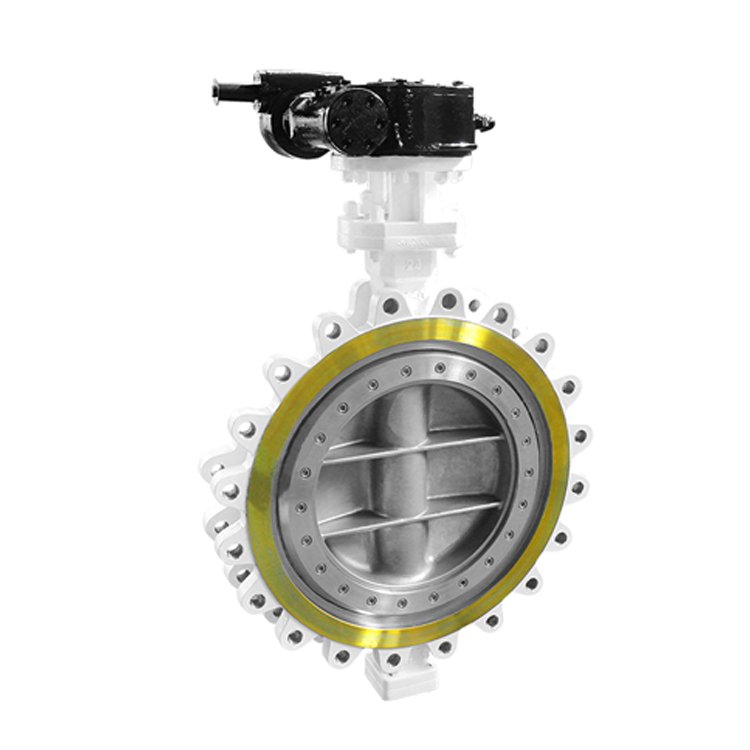
The photographs illustrate the exterior connection styles, not interchangeable specifications. Ask for a dimensional drawing to confirm flange drilling, thread type and engagement, disc projection and the required fasteners for the offered model.
Dead-End Service Is a Separate Rating
In this comparison, dead-end service means retaining pressure with downstream pipework or a flange removed under the manufacturer's specified arrangement. Independent bolting is useful, but it does not alone establish the strength, seat retention or sealing performance required for that condition.
For a concrete example, Bray's Series 30/31 specification lists different inline and dead-end pressure ratings for its standard-disc lug configurations. This demonstrates why the two conditions must be checked separately. Those values belong to Bray's specified products and are not ratings for Pioneer valves.
State whether a downstream flange remains fitted, which side is pressurized, and the maximum differential pressure at operating temperature. Request written confirmation of the permitted configuration. A valve rating also does not replace the site's isolation and depressurization procedure for opening a line.
Flange Fit and Bolting Checks
Match the actual flange standard
Nominal size is only the starting point. Check drilling, bolt circle, facing and the available bore. A valve that can be positioned between flanges may still have incompatible threads, insufficient sealing contact or disc interference. Use the approved valve and pipework drawings together.
Specify the correct fasteners
For threaded lugs, confirm thread form, pitch, engagement and permitted bolt length. For through-bolting, confirm the assembly length and access for tightening. Do not assume bolts from the removed valve can be reused with another body style. Fastener grade and tightening requirements should follow the approved installation specification.
Check the disc and flange seal
The open disc can project beyond the body faces. Nearby lined pipe, reducers or equipment can therefore affect clearance. Some resilient seats seal directly against the flange, while other designs need specified gaskets. Bray's resilient seated installation manual explains these considerations for its products. Follow the instructions for the actual supplied valve.
Choose Around the Maintenance Job
For a continuous line with no need for independent removal at the valve, a wafer configuration can be a practical candidate if the specified materials and ratings meet the duty. Confirm that there is enough space to install the valve and inspect or replace it during a shutdown.
If a pump, strainer or downstream spool will be removed regularly, a rated lug configuration may support the required connection arrangement. Review how the equipment and pipework will be supported, how fasteners will be accessed and which section must be isolated. The body style should serve that maintenance plan.
If the proposed duty cannot be confirmed for either option, ask whether a double-flanged design or another isolation arrangement is needed. Do not treat adding lugs as a substitute for a documented end-of-line specification.
Keep Seat Selection Separate
After choosing the connection, confirm fluid compatibility, pressure-temperature limits, leakage acceptance and operation. For elastomer selection, see our rubber seated butterfly valve guide. For sealing geometry, the double offset vs triple offset comparison addresses a different decision.
A useful quotation request describes both: for example, the required lug connection and downstream-removal condition, followed by the medium, seat requirement and leakage test. That allows suppliers to quote the same duty instead of choosing different assumptions behind an identical nominal size.
- Identify the installation and any future downstream-removal requirement.
- Confirm flange dimensions, bore, fasteners and disc clearance.
- State inline and required dead-end pressure conditions.
- Specify materials, leakage acceptance and actuator requirements.
- Compare the valve, installation hardware and documentation on the same scope.
Frequently Asked Questions
Can a lug butterfly valve always work at full pressure with one flange removed?
No. Use the manufacturer's stated dead-end rating for the exact size, seat and configuration. It may differ from the normal inline rating and can depend on pressure direction. Ask whether the rating applies with the downstream flange removed or requires additional support. Include this condition in the purchase specification before planning any downstream pipe removal.
Can a wafer butterfly valve replace a lug valve?
Only after reviewing the installation and maintenance requirements. A wafer valve may fit the space but use a different bolting arrangement and offer different end-of-line capability. Confirm flange drilling, face-to-face length, disc clearance and the method of supporting adjacent pipework. If independent downstream removal is required, a simple same-size substitution may not satisfy the original duty.
Do wafer and lug valves require different seat materials?
Body style does not determine seat material. Both connection styles can occur with different sealing constructions, depending on the manufacturer's range. Select the seat against fluid composition, temperature and leakage requirements, then confirm that construction is available in the required body. Do not infer an EPDM, PTFE or metal seat solely from the external bolt pattern.
Are separate flange gaskets always required?
No. Some resilient seated designs use the extended seat face as the flange seal, while other valve constructions require a different gasket arrangement. Follow the manual and approved drawing for the selected model. Adding a gasket without checking can change compression or clearance, so include flange facing and gasket requirements in the installation review before ordering bolts.
Does a lug body improve flow capacity?
Not by itself. Flow capacity depends on the internal passage, disc geometry, valve size and opening angle. Two body styles within one valve family can have similar internal arrangements. For a flow-critical application, request the actual Cv or Kv data at the required opening and compare pressure drop under the same fluid and operating conditions.
What should I send for a wafer or lug valve quote?
Send the valve size, quantity, fluid, operating temperature, pressure and maximum shutoff differential. Add the flange standard, face-to-face length, seat and disc materials, and operation method. State explicitly whether the valve must remain installed with downstream pipework removed. Drawings or photographs of the existing connection help identify bolting, access and replacement constraints before a configuration is proposed.
Final Thoughts
Choose wafer or lug construction by how the valve must attach to the pipework and how that line will be maintained. Confirm flange fit, disc clearance and any dead-end rating before accepting a quotation. Pioneer Valve can review those requirements against its butterfly valve range. Send your connection drawing and operating conditions so the proposed configuration addresses both the process duty and installation.
Discuss Your Valve Connection